

 Misturat Alausa
Compliance operations are becoming more complex. As a result, the way organizations manage investigations, reviews, and internal requests can significantly impact efficiency and risk management. Therefore, it is important for compliance teams to have a centralized workflow that keeps cases organized and moving efficiently without unnecessary delays when handling Know Your Customer (KYC) reviews, fraud investigations, sanctions alerts, or regulatory inquiries.
However, even with growing compliance demands, many organizations still depend on traditional case management systems that assign each case to a single owner, making collaboration difficult and slowing resolution times.
A workflow-driven approach to case management eliminates these limitations by allowing cases to move seamlessly between the right team members, improving collaboration, accelerating investigations, and increasing visibility across the entire process.
The Challenges of Traditional Case Management
Traditional case management systems are typically built to follow a simple model, which is one case, one owner. While this model may work for simple tasks, it becomes less practical when resolving a case that requires input from multiple teams or specialists. For instance, a compliance investigation that involves a suspicious activity may start with an analyst, but resolving the case may require additional input from fraud specialists, compliance managers, legal teams, or customer support. As a result, when cases are locked to a single assignee, handoffs become manual, updates can be missed, and important context may be scattered across emails or messaging platforms.
These limitations often lead to:
- Delayed case resolution due to manual transfers.
- Reduced visibility into the status and progress of investigations.
- Inconsistent workflows across teams.
- Difficulty tracking ownership and accountability.
- Challenges in reporting on case performance and operational efficiency.
As organizations expand, these inefficiencies become more costly, making it increasingly important to adopt a case management system built for collaboration and scalability.
How Workflow-Driven Case Management Improves Collaboration and Resolution Times
Workflow-driven case management enables organizations to move away from static case assignments toward structured processes that reflect how teams actually work. Instead of being managed by a single individual from start to finish, cases move through predefined workflow stages and can be automatically assigned to the appropriate stakeholders based on your organization’s operational requirements.
This approach provides several advantages:
- Faster Case Resolution: Automated routing reduces delays caused by manual reassignment, ensuring that each case reaches the right person at the right time.
- Improved Cross-Team Collaboration: Compliance investigations rarely involve one person alone. Workflow-driven systems allow multiple stakeholders such as analysts, investigators, managers, and others to contribute throughout a case’s lifecycle while maintaining a complete history of actions and decisions.
- Better Visibility Across Operations: Managers gain a clearer view of the status of every case, which stages create delays, and how workloads are distributed across teams. This visibility supports more informed operational decisions and resource planning.
- More Accurate Classification and Reporting: Organizing cases by type and category makes it easier to identify trends, monitor recurring issues, and generate reports that support regulatory compliance and continuous improvement.
Ultimately, workflow-driven case management enables organizations to standardize processes while maintaining the flexibility to adapt as operational needs change.
How Prembly’s New Case Workflow System Simplifies Every Investigation
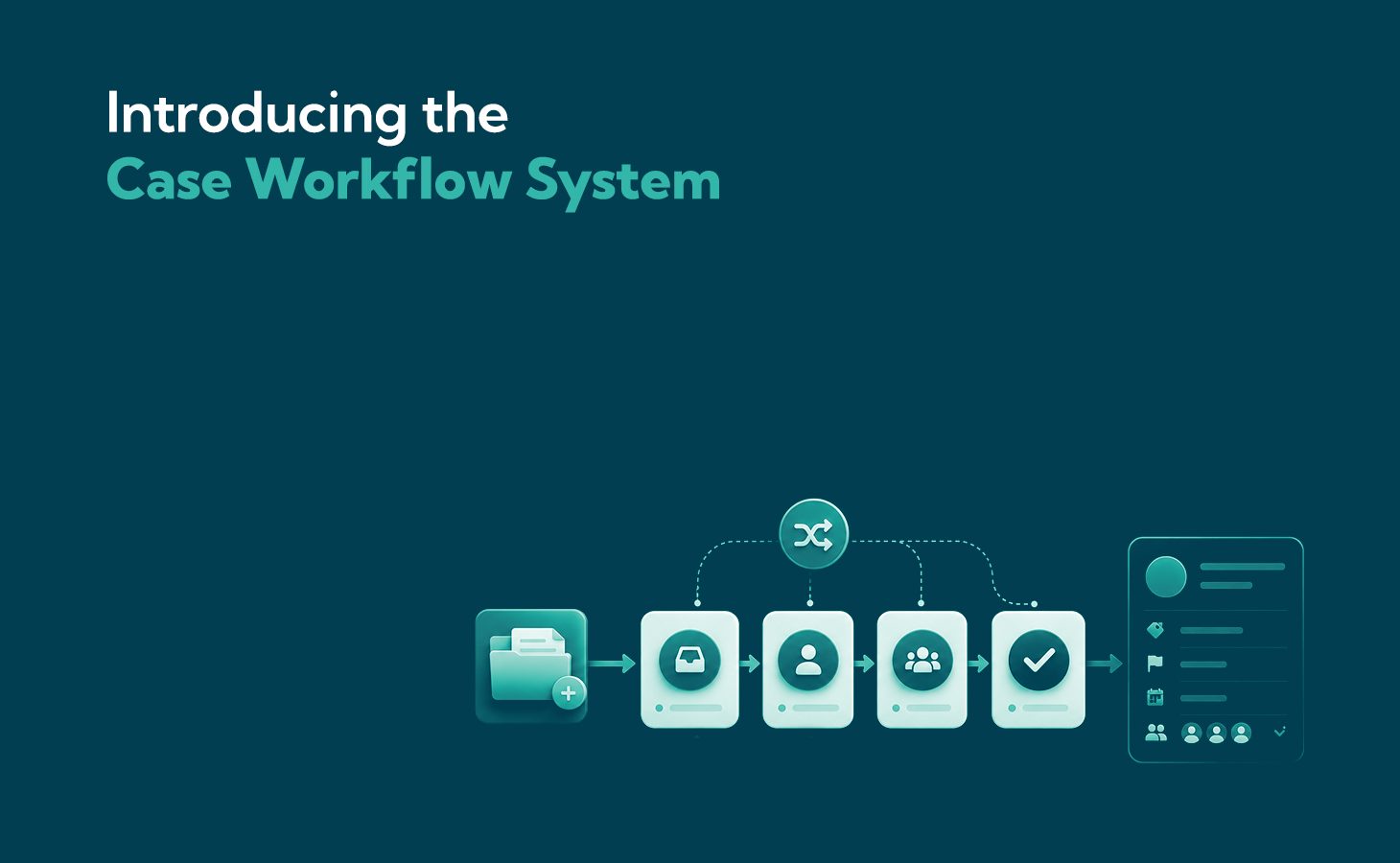
To help organizations manage investigations more efficiently, Prembly has introduced a redesigned end-to-end case workflow system that supports modern compliance operations. Rather than restricting cases to a single assignee, the system allows organizations to create customizable workflows that mirror their internal processes. Cases can move seamlessly between the right stakeholders from initiation through resolution, ensuring smoother collaboration and greater operational control.
Key capabilities include:
- Dynamic case routing for more flexible case management
- Expanded case types and categories for more accurate classification, reporting, and performance analysis.
- Collaborative case management, allowing multiple stakeholders to contribute throughout the lifecycle of a case while maintaining complete visibility into progress.
By aligning case management with the way teams actually operate, organizations can minimize manual effort, resolve investigations more quickly, and improve consistency across compliance operations.
As regulatory requirements continue to evolve, organizations need case management solutions that go beyond storing information by enabling collaboration, strengthening accountability, and improving operational efficiency. With Prembly’s new Case Workflow System, compliance teams can streamline investigations, improve visibility across every stage of the process, and build workflows that scale alongside their business.