

 Misturat Alausa
For businesses that onboard customers in South Africa, a South African national ID card can be an important source of identity information. However, simply collecting an ID number is not enough. Businesses need to verify that the information is valid and, where the verification workflow supports it, confirm that the person presenting the document matches the identity being checked.
Businesses can use South African ID verification to check against trusted identity records alongside document and biometric verification where the necessary data sources are available. These checks help fintechs, banks, marketplaces, and other digital platforms support KYC requirements, detect inconsistencies, and reduce identity fraud during customer onboarding.
As more customer journeys move online, businesses need reliable ways to verify a South African national identity card without relying entirely on manual checks. Automated identity verification can make these checks more consistent and easier to integrate into digital onboarding at scale.
What Will Verifying a South African ID Achieve?
Verifying a South African national ID card helps businesses conifrm that the identity information submitted by a customer is consistent with trusted identity records and other available verification data. This is particularly important for regulated businesses that need to carry out customer due diligence and meet Know Your Customer (KYC) requirements.
For digital onboarding, South African ID verification can help businesses spot inconsistencies before opening an account. Depending on the verification method, businesses may check the ID information against authoritative records and combine it with document or biometric checks to provide greater confidence that the applicant is who they claim to be. South Africa’s Department of Home Affairs identifies online verification and biometric capabilities as part of its broader identity management infrastructure.
The compliance value is particularly relevant for accountable institutions subject to the Financial Intelligence Centre Act (FICA), which requires customer identities to be established and verified in applicable circumstances. Businesses must also consider the Protection of Personal Information Act (POPIA) when handling South African identity information, which sets requirements for the lawful processing of personal information.
For businesses, verifying a South African national identity card involves more than confirming that the document exists. Effective verification helps create a more reliable identity record for onboarding, supports applicable KYC and compliance processes, and can reduce the risk of accepting inaccurate or fraudulent identity information.
How Do You Verify a South African ID Document?
Verifying a South African ID document can involve multiple checks based on the verification service, available data sources, and the business’s risk requirements. A typical South African ID verification workflow may combine document checks, identity data validation, and biometric verification to establish that the information submitted is accurate and belongs to the person completing the onboarding process.
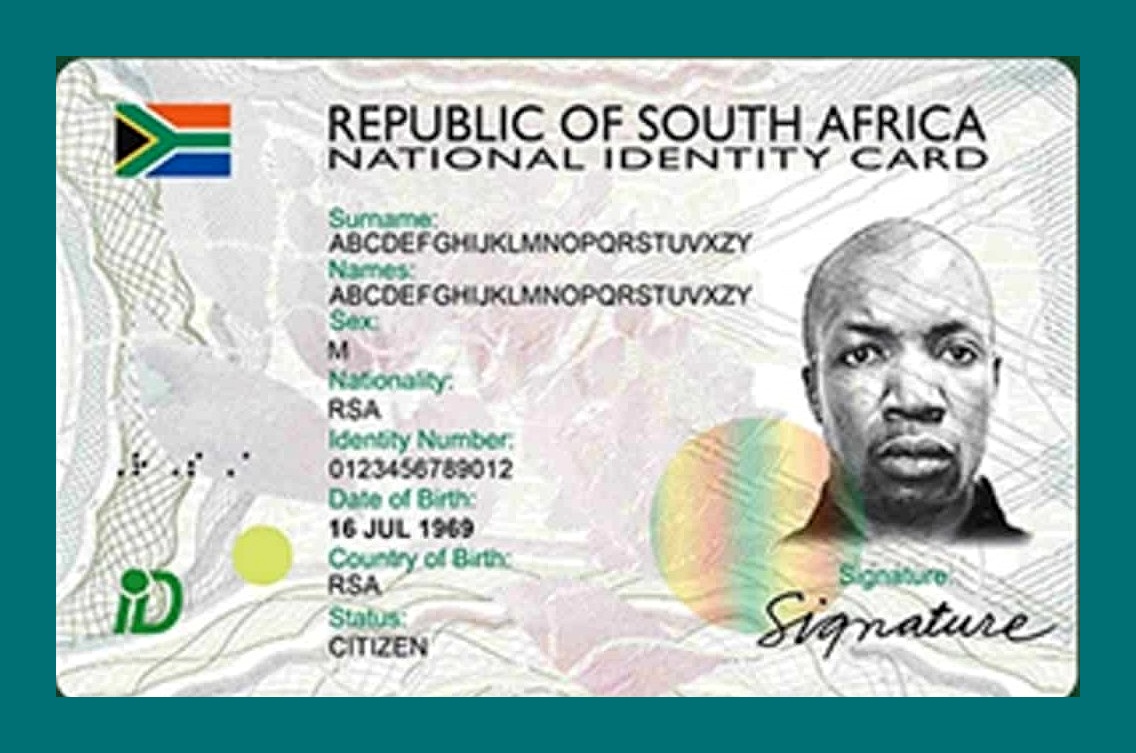
A document-based check can extract key details from a South African national ID card, such as the document type, ID number, name, date of birth, and other available fields. Businesses can then compare this information with the applicant’s details or validate it against an authoritative source where one is available.
Biometric checks add another layer of assurance. Face matching can compare a live image with the photograph associated with the identity document, while a liveness check helps confirm whether the interaction involves a live person rather than a photograph, replayed video, or other presentation attack.
Together, these checks help businesses answer different verification questions: Is the identity information consistent? Does the document appear valid? And does the person presenting the South African national identity card match the identity being verified? The exact checks used can vary based on the business’s requirements, verification provider, and available data sources.
How Does DHA Non-Document Verification Work?
DHA non-document verification allows businesses to verify a customer’s identity identity without requiring them to upload a photograph of their South African ID card. Instead, the verification process can use the applicant’s South African ID number and biometric information to confirm whether the identity details is consistent with the trusted records.
In a typical South Africa identity verification workflow:
- The applicant provides their 13-digit South African ID number.
- The applicant completes a live selfie or liveness check to show that a real person is present.
- The submitted identity and biometric information are checked against available DHA identity records and verification data.
- The business receives a verification result that can be used to continue onboarding or trigger further review.
This approach can help reduce some of the friction associated with document-based verification. Customers do not need to take a photo of their South African national identity card, while businesses can avoid common issues such as poor image quality, glare, damaged documents, or incorrectly captured ID cards.
For businesses, non-document verification can therefore provide an alternative way to support South African ID verification within digital onboarding, especially when the goal is to reduce document-related friction while maintaining stronger identity checks.