


 Misturat Alausa
Ticketing fraud is one of the major issues faced by organizers, ticketing platforms, and fans during concerts and live events. This is often a result of sold-out events attracting scammers who create fake accounts, sell counterfeit tickets, or exploit the secondary market to profit from high demand.
Traditional ticket checks at the venue may confirm whether a ticket is valid, but they do not always address fraud earlier in the purchasing process. Digital identity verification for ticketing allows platforms to verify users earlier in the transaction, reducing the risk of fake accounts, fraudulent purchases, and unauthorized ticket resales.
This article examines why ticketing fraud is increasing, how it affects live events, and how identity verification can help prevent ticket scams and reduce ticket scalping without creating unnecessary friction for genuine fans.
Why Is Ticketing Fraud Exploding at Live Events?
Fast-selling concerts and festivals usually bring about a shortage of available tickets, driving prices higher on secondary markets. This high demand creates opportunities for fraudsters to exploit the market by selling counterfeit tickets, duplicating QR codes, or offering tickets they do not actually own. The transition toward digital ticketing has also made it easier for scammers to create fake accounts, impersonate legitimate sellers, and distribute fraudulent tickets on a larger scale. Social media platforms and online marketplaces can further spread these scams, making it difficult for fans to determine whether a ticket offer is legitimate or fraudulent.
The impact on event organizers and ticketing platforms goes beyond lost ticket sales and includes financial losses, customer complaints, reputational harm, and disputes at event venues. Therefore, it is necessary to implement stronger measures to prevent event ticket scams as the live events industry continues to expand.
How Does Ticket Fraud Actually Disrupt Live Events?
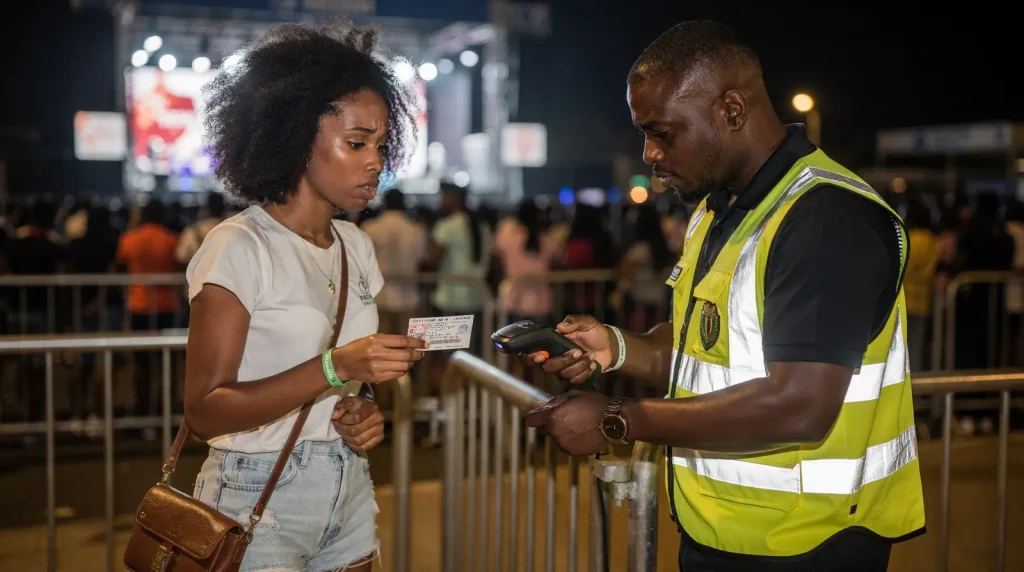
Ticket fraud can quickly turn a seamless event experience into a costly operational problem. When fake or duplicated tickets make it to the venue, fans who believe they have purchased legitimate tickets may be denied entry after discovering that their tickets are fraudulent. This can result in long lines, unsuccessful scans, and increased pressure on customer support teams as staff work to handle disputes and resolve access issues.
Event organizers may also face refund requests, payment disputes, customer complaints, and reputational damage when attendees lose trust in the ticketing process. At sold-out concerts and festivals, a large-scale ticket scam can impact thousands of fans and disrupt event operations. These challenges show why preventing event ticket scams should start early in the ticketing process, rather than depending only on validation checks when attendees reach the venue.
How Does Identity Verification Stop Ticket Scalping?
Identity verification can help limit ticket scalping by linking each ticket purchase to a verified individual. Scalpers often take advantage of multiple accounts, automated tools, and anonymous transactions to purchase large quantities of tickets and resell them at significantly higher prices. This may be carried out by creating fake accounts, using stolen payment details, and deploying bots to secure tickets within seconds of an on-sale.
With digital identity verification for ticketing, every buyer is authenticated before purchase, helping prevent bulk account creation and automated bot purchases. Rather than organizers or ticketing platforms relying solely on usernames, email addresses, or payment details, they can use verified identity information to confirm that an account belongs to a genuine individual. This provides an additional layer of event ticket scam prevention while helping legitimate fans access tickets more fairly.
How Can Prembly Prevent Ticket Fraud?
Prembly offers identity verification tools that event organizers can integrate into their ticketing and attendee management workflows. Before an event, organizers can verify attendee details and create trusted registration records, helping maintain a more accurate and reliable attendee database.
With IDform, this verification process can continue through event-day check-in. When attendees arrive, organizers can use their pre-registered information to confirm their identity and check them in without requiring them to complete the registration process again. Where stronger identity verification is needed, biometric verification can also be incorporated into the check-in process. This provides event organizers with a seamless verification process from registration through check-in, while reducing the need for manual checks by event staff.
Ready to strengthen your event’s ticketing and check-in process? Let’s talk about how Prembly’s platform can help you create a more secure and seamless attendee experience.