These days, we are seeing more businesses shift their services online. As a result, proving that a person is who they claim to be has become an essential part of delivering secure and trusted digital experiences. For organizations serving millions of people, identity verification goes beyond checking a name or document. It is about making sure that the right person gets access to the right service.
That is the problem Botosoft Technologies seeks to solve.
With a goal of ensuring that the right people have access to the right things, Botosoft builds technology solutions across education, supply chain management, and anti-counterfeit operations. Through its work with major education organizations, such as WAEC, Cambridge, and Pearson, the company operates in environments where identity, authentication, and scale are crucial. Using Prembly’s identity verification infrastructure, this ensures that the certificates are issued to the right individuals.
About Botosoft
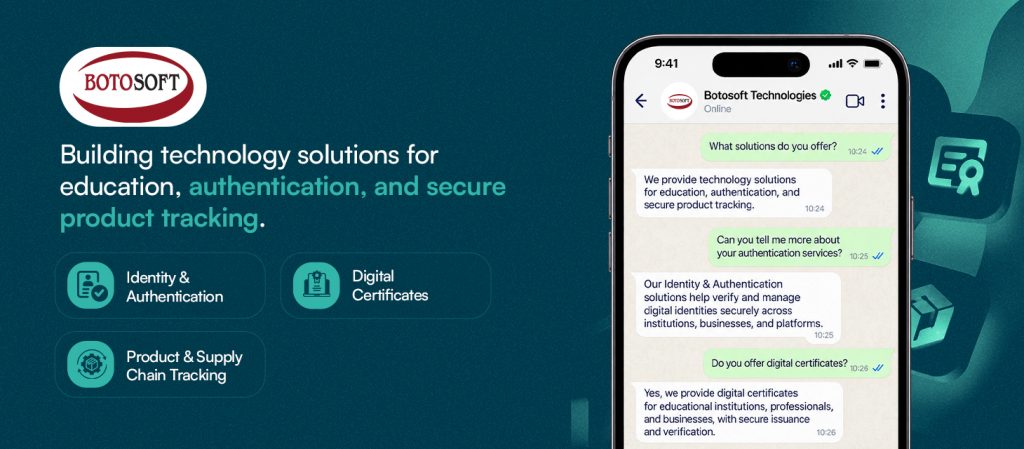
Botosoft Technologies builds technology solutions focused on identity, access, authentication, and product tracking. Education is one of its largest markets, due to the scale involved. WAEC has tested more than 40 million candidates in Nigeria since 1952, highlighting the scale of the examination ecosystem Botosoft operates in.
For Botosoft’s digital certificate work, that scale makes reliable identity verification essential. Issuing digital certificates to the right individuals requires infrastructure that can support large volumes of users while maintaining confidence in each person’s identity.
Botosoft operates not only in the education sector but also across supply chain management and anti-counterfeit technology. Its solutions include parcel monitoring for international examination bodies to help prevent question paper leaks, product authentication labels for alcohol and brewery brands, and supply chain tracking that monitors products from manufacturers to retailers while helping detect tampering.
The Challenge: Verifying the Right Person
As Botosoft worked on issuing digital certificates, identity verification became a crucial part of the process. It is important that digital certificates are connected to the right individual. This required Botosoft to have access to reliable identity verification methods that could help establish that the person requesting or receiving a certificate was the rightful certificate holder.
The solution also needed to support different identity documents and verification methods, including Nigeria’s National Identification Number (NIN), Bank Verification Number (BVN), and international passports. For a product operating at the scale of a national examination system, identity verification needed to be an integrated part of the digital certificate experience rather than a separate manual process.
The Solution: Identity Verification With Prembly
Botosoft’s relationship with Prembly began through IdentityPass before transitioning to Prembly.
Today, Botosoft uses Prembly’s identity verification capabilities as a trusted partner for its verification needs. This includes the WAEC Digital Certificate project, where Botosoft verifies individuals before digital certificates are issued.
Prembly supports multiple identity sources, including NIN, BVN, and international passports, providing Botosoft with the verification infrastructure it needs to confidently verify users across its solutions and use cases.
This makes identity verification an important part of Botosoft’s digital certificate process, helping ensure each certificate is linked to the correct individual.
Supporting Botosoft’s Next Stage of Growth
Botosoft, with a presence in key markets including the UK and Nigeria, is looking to expand its digital certificate product across more West African markets, starting with Ghana, Liberia, and Sierra Leone.
As part of this expansion, the company is already engaging Prembly to explore identity verification coverage across these markets, with plans to increase its coverage further as the product grows.
For Botosoft, the next phase is more than taking an existing product into new countries. It also requires identity infrastructure that can support different markets and their verification requirements as the product expands.