

 Maruf Oyeniyi
Financial institutions and regulated businesses face increasing pressure to identify financial crime risks and meet their Anti-Money Laundering (AML) obligations. In 2024 alone, global regulatory penalties reached $4.6 billion, with North America accounting for 95% of the total.
One important part of an effective compliance programme is AML watchlist screening. This process helps businesses identify customers, business partners, and Ultimate Beneficial Owners (UBOs) who may appear on sanctions lists, law enforcement records, or Politically Exposed Persons (PEP) databases.
By identifying potential risks during onboarding and throughout the customer relationship, businesses can make more informed compliance decisions, investigate suspicious matches, and reduce their exposure to financial crime.
This guide explains how AML watchlist screening works, the different types of screening lists, common challenges, and best practices for building an effective screening process.
What Is AML Watchlist Screening?
AML watchlist screening is the process of checking individuals and businesses against relevant sanctions lists, law enforcement records, Politically Exposed Persons (PEP) databases, and other risk-related information sources. These sources may be maintained by government agencies, international organisations, or specialised compliance data providers. Screening helps businesses identify potential financial crime and compliance risks before establishing or continuing customer relationships. To understand how identity verification supports broader anti-money laundering efforts, read our article KYC vs. AML: Understanding the key differences in compliance.
The goal is to help businesses identify potential financial crime and compliance risks, including money laundering, terrorist financing, and sanctions evasion. However, effective screening goes beyond exact name matching. Screening software must account for variations in customer information that can affect matching accuracy, including:
- Phonetic Similarities: Names that sound alike but are spelled differently (e.g., “Jon” vs. “John”).
- Spelling Variations and Typos: Minor errors in data entry.
- Transliterations: The process of converting names from one writing system (e.g., Cyrillic, Arabic, Hanzi) into another (e.g., the Latin alphabet).
- Cultural Naming Conventions: Variations in the order of first, middle, and last names, or the use of patronymics.
Effective screening technology helps businesses account for these naming variations while reducing false positives (incorrectly flagging legitimate individuals) and false negatives (failing to identify genuine matches). Both are important, as excessive false positives increase manual review workloads, while false negatives can expose businesses to significant compliance risks.
Why Is AML Watchlist Screening Important?
For businesses subject to applicable AML and sanctions regulations, effective screening plays an important role in identifying potential risks and meeting compliance obligations. Failure to implement appropriate controls can result in significant consequences, including:
- Financial Penalties: Regulatory violations can result in substantial fines. In Nigeria, for example, the Central Bank of Nigeria and Securities and Exchange Commission imposed a combined ₦678 million in penalties on banks in 2024 for regulatory infractions.
- Legal and Operational Consequences: Depending on the nature and severity of the violation, businesses may face regulatory investigations, operational restrictions, or other legal consequences.
- Reputational Damage: Compliance failures can undermine confidence among customers, investors, business partners, and other stakeholders.
Effective watchlist screening helps businesses identify potential risks early, investigate relevant matches, and make informed decisions about customer relationships.
Types of AML Watchlists
Risk is multifaceted, and therefore, the watchlists used to identify it must be comprehensive. Most robust screening programs utilize a combination of the following list categories to ensure total coverage:
1. Sanctions Lists: These play an important role in regulatory compliance. They are government or international body-issued databases identifying individuals, entities, and entire jurisdictions subject to economic or trade restrictions. Businesses must assess applicable sanctions restrictions before establishing or continuing relationships with listed individuals or entities. Depending on the relevant sanctions programme, certain transactions may be prohibited, restricted, or require specific authorisation. Examples: The US Treasury’s OFAC (Office of Foreign Assets Control) SDN List, the EU Consolidated Sanctions List, and the UN Security Council Consolidated List.
2. Crime and Law Enforcement Lists: These lists are maintained by national and international police forces and agencies. These sources provide information about wanted individuals, fugitives, and persons sought in connection with serious criminal investigations. Examples include INTERPOL Red Notices and the FBI’s Most Wanted lists.
3. PEP Lists (Politically Exposed Persons): Politically Exposed Persons (PEPs) are individuals who hold or have held prominent public functions, such as senior government officials, politicians, and high-ranking judicial or military officers. Screening may also cover their family members and close associates. Although being identified as a PEP does not imply criminal activity, these relationships may present elevated risks of bribery, corruption, or misuse of public funds. Businesses must assess these risks and apply appropriate due diligence measures, including Enhanced Due Diligence (EDD) where required by applicable regulations. For a deeper understanding of PEP screening and its role in compliance, read our article on Politically Exposed Persons: Definition, Risks, Screening, and Compliance.
4. Adverse Media Lists (Negative News): Official lists can sometimes lag behind real-world events. Adverse media screening involves searching news databases and public records for individuals or entities associated with negative coverage related to financial crime, fraud, or corruption. This can help businesses identify potential risk indicators that may require further investigation, even when an individual or entity does not appear on an official sanctions list.
How AML Watchlist Screening Works
A modern, effective AML watchlist screening program follows a structured, repeatable, and increasingly automated process:
- Data Collection and Verification (KYC): The foundation of good screening is good data. During onboarding, organizations and companies must gather and verify customer details (full name, DOB, address, ID documents). Automated Know Your Customer (KYC) checks ensure the data is clean and structured.
- Automated Watchlist Screening: The collected customer information is screened against relevant watchlists and risk databases. Modern screening tools may use fuzzy matching algorithms to identify potential matches despite differences in spelling, transliteration, or naming conventions. For more on how businesses automate identity checks during customer onboarding, read our article on KYC APIs: How They Work, Benefits and How Business Use It.
- Alert Generation and Triage: When a potential match occurs, the system generates an alert. Sophisticated systems use automated risk scoring to prioritize these alerts, separating likely false positives from high-risk matches that require immediate human investigation.
- Continuous Monitoring: Screening should continue beyond initial onboarding, with the frequency and approach determined by the business’s risk assessment and applicable regulatory requirements. Automated monitoring tools can help identify changes in a customer’s risk profile, such as newly imposed sanctions or changes in PEP status, and generate alerts for further review. For more on maintaining compliance beyond initial screening, read our article Ensuring Effective Ongoing Monitoring for AML and CFT Compliance.
Overcoming the Challenges of Screening
Despite technological advancements, screening remains challenging. Institutions frequently grapple with:
- The False Positive Burden: Overly sensitive matching rules can drown compliance teams in false alerts, leading to alert fatigue and slowing down legitimate customer onboarding.
- Data Quality Issues: Incomplete, inaccurate, or poorly formatted customer information can affect screening accuracy, increasing the likelihood of missed matches or unnecessary alerts.
- The Velocity of Change: Watchlists change constantly. Relying on manual updates or infrequent data refreshes leaves institutions exposed to new risks.
- Jurisdictional Complexity: Multinational companies must navigate a labyrinth of differing AML regulations and required lists across various regions.
Best Practices for Effective AML Watchlist Screening
To improve screening accuracy, reduce manual workloads, and support ongoing compliance, businesses should consider the following best practices:
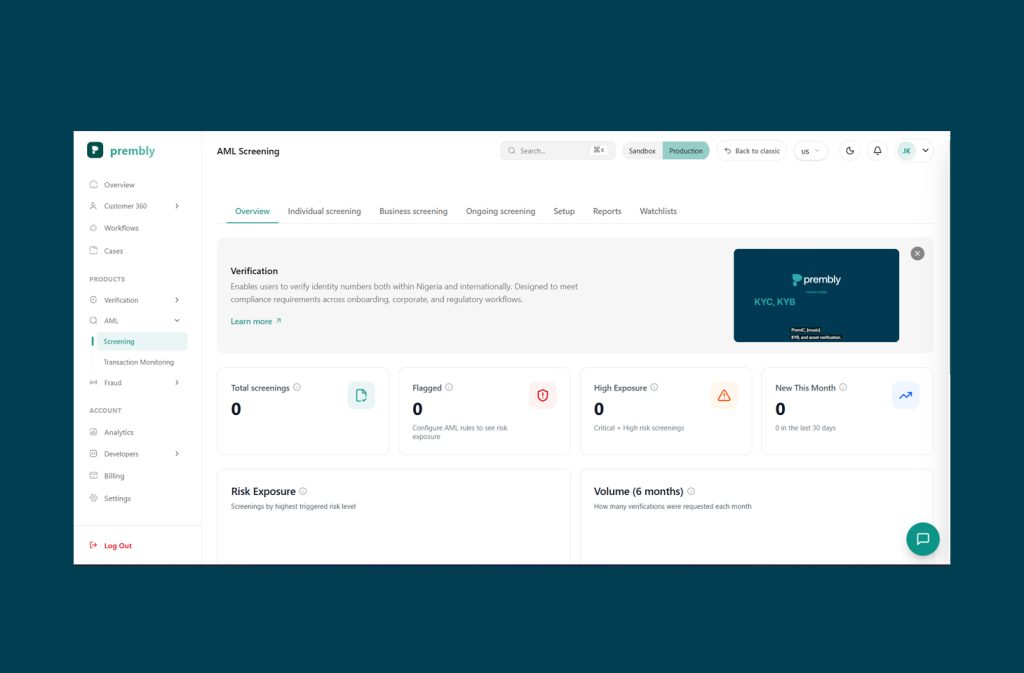
- Embrace Automation and API Integration: Move away from manual checks. Integrate automated screening directly into the user onboarding journey to check data in real-time.
- Leverage Advanced Fuzzy Matching: Ensure your screening provider uses sophisticated algorithms that understand contextual naming conventions and transliterations to reduce false positives without increasing false negatives.
- Keep Screening Data Updated: Choose a screening solution that regularly refreshes its data sources to reflect changes in sanctions lists, PEP records, and other relevant risk information.
- Implement Ongoing Monitoring: Establish a risk-based rescreening process to identify changes in customer profiles after onboarding. Where supported, automated alerts can help compliance teams respond promptly to newly identified risks.
- Utilize Intelligent Workflows: Implement systems that automatically prioritize alerts based on risk scores, allowing human analysts to focus their expertise on the most complex and critical investigations.
AML watchlist screening is an essential part of identifying potential financial crime risks and maintaining effective compliance processes. By combining reliable screening data, automated checks, and ongoing monitoring, businesses can identify high-risk individuals early, reduce manual workloads, and make more informed compliance decisions.
With the right screening infrastructure, organisations can strengthen their compliance processes while maintaining a more efficient customer onboarding experience.
Looking to improve your AML screening process? Talk to the Prembly team to learn how our compliance solutions can support your business.