

 Misturat Alausa
It can be quite challenging when expanding KYC onboarding across multiple countries because businesses would have to verify different identity documents, business records, and regulatory requirements in each market. Document verification plays a key role in this process by helping businesses verify that the identity information provided during onboarding is genuine and belongs to the person or business being verified.
The challenge becomes even more complex as businesses enter new markets. National identity documents, passports, tax records, and business registration documents can vary by country, while fragmented verification systems can make it difficult to maintain consistent KYC and KYB compliance across jurisdictions. Also, depending on manual checks or separate verification processes can create delays and leave gaps that increase identity fraud risk.
Modern KYC onboarding combines document authentication with other identity checks, such as biometric verification and liveness detection, to confirm that a customer is a real person and that the submitted information is authentic. When businesses operate across multiple markets, having these checks within a unified verification workflow can make it easier to apply consistent controls while adapting to local requirements.
Why Does Onboarding Fail Across Borders?
Global KYC onboarding is usually difficult to manage when businesses expand into markets with different identity documents, verification systems, and regulatory requirements. This simply means that a verification process that works well in one country may not be easily applied in another, especially when compliance teams have to handle different document types, data sources, and verification requirements across jurisdictions.
Cross border onboarding can become fragmented when businesses rely on manual document checks, separate identity verification systems, and inconsistent data sources, resulting in slow customer onboarding and creating more opportunities for errors. The more verification steps a customer has to complete, the greater the risk of delays or abandonment.
Businesses also have to navigate different approaches to KYC compliance from one market to another. National identity documents may vary, access to identity databases may differ, and regulators may have different requirements for customer due diligence and risk assessment. As a result, businesses cannot simply replicate a domestic KYC process and expect it to work across every market.
A robust global KYC onboarding process therefore needs to support different identity documents and verification requirements while maintaining consistent compliance controls. This makes document verification an essential first step for businesses looking to verify customers reliably as they expand across borders.
What Makes Document Verification the First Checkpoint?
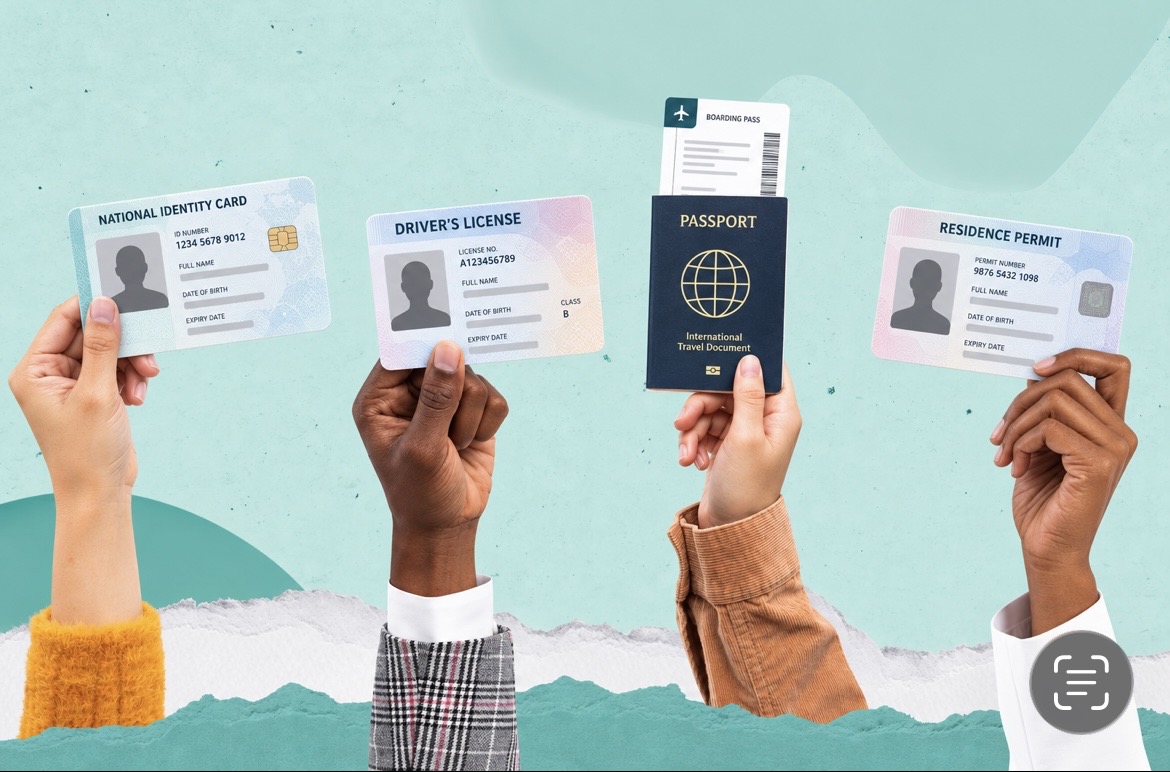
Document verification is an essential first step in a reliable KYC onboarding process because it provides businesses with a trusted source of identity information to work with. Passports, national identity cards, and driver’s licenses contain key details that can be checked against trusted sources to help confirm that an applicant is who they claim to be.
This is why national identity verification is very important when businesses onboard customers across different countries. The required identity documents differ by jurisdiction, so businesses need to identify and authenticate different document types while ensuring the information provided is accurate. Without a reliable document check, later decisions around customer risk and compliance may be based on unverified information.
Modern document authentication can help detect altered, expired, or fraudulent documents before an applicant moves further through the onboarding process. By integrating document checks with other identity verification methods, businesses can build stronger evidence that a customer is genuine and reduce the risk of fraudulent or synthetic identities entering their systems.
How Does Biometrics Stop Impersonation Fraud?
Impersonation fraud can be reduced through biometric verification because it connects an identity to the person who is actually completing the verification process. Unlike documents or passwords, which can be stolen, copied, or shared, biometric information such as facial features can help establish whether the person presenting an identity matches the individual associated with the verified record.
Biometric verification is necessary because document verification alone cannot always prevent impersonation. A fraudster may use a stolen or altered identity document along with someone else’s personal information during onboarding. Without an additional check, the business may have limited evidence that the person presenting the document is its legitimate owner.
A common approach is to combine document verification with facial biometric verification and liveness detection. The customer’s face can be matched with the photograph on their identity document, while liveness detection helps determine whether the biometric check is being completed by a live person rather than a photograph, video, or other spoofing attempt. Biometrics adds an extra layer to the identity verification process when managing global KYC onboarding.
Why Does KYB Need More Than KYC Checks?
KYC and KYB address different verification risks. KYC focuses on verifying individuals, while KYB verification helps businesses confirm that a company is legitimate, identify who owns or controls it, and evaluate the risks involved in the business relationship. Verifying one director or representative does not provide a complete picture of the company behind that individual.
A proper business verification process may include confirming a company’s registration details, tax information, business status, ownership structures, and beneficial owners. It may also involve screening the business and relevant individuals against sanctions lists, PEP databases, and other risk indicators. These checks help compliance teams understand who they are working with and identify risks that individual identity verification alone may not reveal.
Bringing KYC and KYB checks together can give businesses a clearer view of both the individual and the organization. A unified onboarding process integrates identity verification, business verification, AML screening, sanctions screening, and risk assessment, helping compliance teams reduce fragmented manual checks while maintaining stronger controls across markets.
What Should Multi Country Onboarding Programs Prioritize?
A successful multi country KYC onboarding program needs to balance reliable verification with a seamless customer experience. This simply means that expanding into new markets requires businesses to accommodate different identity documents, verification methods, regulatory requirements, and risk controls without creating unnecessary friction for legitimate customers.
Businesses also need to consider jurisdictional coverage because a verification solution should support the identity documents and trusted data sources available in the markets where the business operates. This allows compliance teams to maintain consistent identity verification and document verification processes while adapting to country-specific requirements.
Risk assessment should also be an integral part of the onboarding process because businesses may need to screen customers and businesses for sanctions, PEP exposure, fraud indicators, and other risks before building a relationship. Combining these checks with KYC and KYB verification can give compliance teams a more complete understanding of the customer or business being onboarded.
Finally, it is important to consider how easily their global KYC onboarding process can adapt as they enter new markets. A scalable approach allows them to add new countries, document types, and verification requirements without rebuilding the entire onboarding workflow.
By prioritizing jurisdictional coverage, document verification, identity verification, KYB checks, and risk assessment, businesses can build an onboarding program that supports expansion into international markets while maintaining consistent compliance controls.
Building a stronger global KYC onboarding process? Talk to our team to see how Prembly can help you verify identities, businesses, and documents across markets.