


 Misturat Alausa
Social media catfishing has taken on a new form as artificial intelligence makes it easier to create convincing faces, personalities, and online identities that do not exist in the real world. AI generated influencers can build audiences, attract engagement, and present themselves as real people, making it increasingly difficult to know who is actually behind a profile.
This creates a growing identity fraud risk. A fabricated persona can be used to gain followers’ trust, promote products, solicit money, or move conversations to private channels where deception can continue. The challenge becomes even greater when AI generated images, videos, voice cloning, and deepfakes are combined to make a synthetic identity appear more authentic.
As AI makes it easier to create convincing online personas, social media catfishing is becoming an identity verification problem as much as a content moderation problem. This article examines how AI generated influencers are changing catfishing, why deepfakes make detection more difficult, and the verification controls platforms can use to protect digital trust.
Why Are AI Generated Influencers Fueling New Catfishing Risks?
Traditional social media catfishing usually involved stealing photos, creating fake profiles, and spending time building relationships with unsuspecting users. But now, AI has made it much easier to create convincing digital personas without relying on a real person’s identity or images.
While AI-generated influencers are digitally created personas that can be designed to look, speak, and behave like real people. They can have realistic faces, curated lifestyles, social media profiles, and even AI-generated videos and voices. When these elements are integrated, it becomes difficult for users to distinguish between a genuine creator and a synthetic persona.
It increases the risks when these identities are used for deception. Fake influencer profiles can build an audience, establish credibility, promote products, direct followers to fraudulent websites, or move conversations into private channels, creating more opportunities for exploitation as their audience grows.
AI also makes fake identities easier to maintain. Instead of manually creating every image, video, or post, bad actors can use generative AI to produce realistic content at scale, making AI-powered catfishing difficult to detect while allowing fraudsters to operate multiple fake identities.
Do Platform Users Recognize AI Influencers When They See Them?
Not always. AI generated influencers can appear convincingly enough to pass as real creators, especially when users encounter them through polished photos, videos, sponsored content, and regular social media activity. As the content becomes more realistic, it can be difficult for an ordinary user to determine whether a profile belongs to a real person or a synthetic identity.
This creates a challenge for social media catfishing detection. Users may rely on signals such as consistent posting, high engagement, polished content, or a large following to judge authenticity. However, these signals do not prove that the person behind an account is real.
For platforms, this means detecting AI generated influencers and fake identities cannot depend on users spotting suspicious content alone. Trust and safety teams need stronger ways to assess whether the identity behind a profile can be trusted.
Why Do AI Deepfakes Raise the Stakes Further?
Social media catfishing is made more convincing by AI deepfakes, which can manipulate or generate realistic faces, voices, and videos to support a fabricated identity. A fake profile may look believable in photos, but deepfake technology can make the persona appear to speak, move, and interact like a real person.
Deepfakes can also make AI generated influencers harder to distinguish from genuine creators. When a synthetic persona regularly appears in videos, interacts with followers, or promotes products, repeated exposure can make the account seem more trustworthy. That perceived authenticity can then be exploited for impersonation, scams, or other types of social media fraud.
This makes reliable identity verification a critical part of onboarding and risk management. Without verifying real identity documents, platforms have no dependable way to tell whether they are dealing with a genuine user or a manufactured identity.
How Do AI Deepfakes Slip Past Trust and Safety Controls?
AI deepfakes may be able to bypass traditional trust and safety controls because many platforms focus on assessing content, account activity, or user-provided information rather than verifying the identity behind an account. A profile may appear legitimate based on its content, engagement, and account history while the identity behind it remains unverified.
This creates a challenge for deepfake detection, as synthetic images, videos, and voices can be generated or altered quickly, making it difficult for content moderation systems to identify every manipulated piece of media before it reaches users. A recent evaluation from the National Institute of Standards and Technology (NIST) found that AI deepfake detection systems can experience a 45% to 50% drop in performance when moving from academic testing to real-world deployment, highlighting the limitations of relying on detection alone.
Traditional verification methods can leave gaps as well. Self-reported details such as a name, date of birth, or profile information do not provide strong evidence that an account belongs to a real person. A synthetic persona can submit convincing information without having a legitimate identity behind it.
For more on how deepfakes can be used to create identity fraud, read this article on Deepfake Identity Fraud: How Financial Institutions Can Detect and Prevent AI Powered Attacks.
What Verification Controls Stop Synthetic Identity Fraud?
There is no single verification control that can detect every synthetic persona or fake account. Effective synthetic identity fraud prevention requires integrating multiple checks to establish whether an account belongs to a real, verifiable individual.
Document verification is usually the first layer of defense. It involves authenticating government-issued identity documents and matching their details against trusted data sources, helping platforms establish whether a user has a legitimate identity during onboarding. This is essential for social platforms, where fake identities can be created to support social media catfishing, scams, or other fraudulent activity.
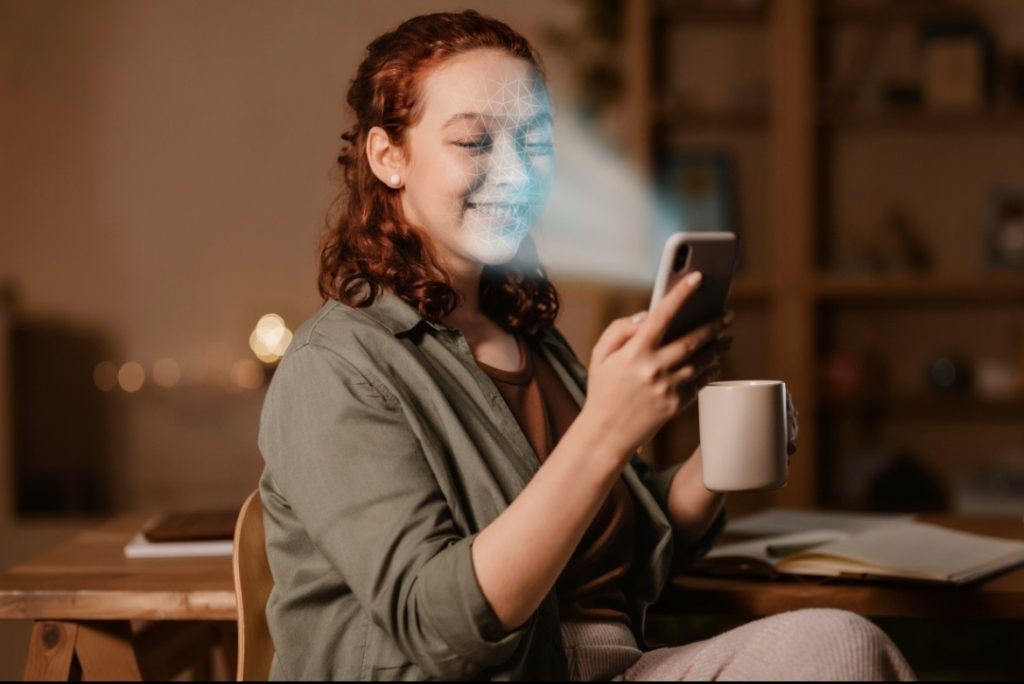
Biometric verification adds another layer by linking the verified identity to the person behind the account. Face matching compares a user’s selfie with the photo on their identity document, while liveness detection can help determine whether the verification is being completed by a live person rather than a photo, video, or other spoofing method.
Platforms can also assess signals like device intelligence, behavioral patterns, and account activity to identify inconsistencies after onboarding. These signals can help flag accounts that show unusual patterns, allowing trust and safety teams to request additional verification when needed.
The goal is not to depend on a single check to identify every AI generated influencer or synthetic identity. Combining document authentication, biometric verification, liveness detection, and ongoing identity checks creates a stronger verification framework that can help platforms reduce identity fraud and build greater confidence in the people behind online accounts.